Walk into any grocery store, and you will find a wall of olive oil in different sizes, different price points, and different labels. Some say extra virgin olive oil. Others say pure, refined, or simply light. The differences matter far more than most people realise. Choosing the wrong grade is not just a question of flavour; it changes the nutritional value, the smoke point, and the integrity of everything you cook.
At DOCCANA, we believe that understanding what you are putting in your pantry is the first step to cooking with intention. So let us break it down.
The Olive Oil Grading System
Olive oil is classified into grades based on how it is produced, its acidity level, and its sensory qualities. The main grades you will encounter are:
- Extra Virgin Olive Oil (EVOO): The highest grade. Cold-pressed, with a free acidity of no more than 0.8%, and no sensory defects. This is premium olive oil in its truest form.
- Virgin Olive Oil: Also cold-pressed but with slightly higher acidity (up to 2%). Still natural, but lower quality than EVOO.
- Refined Olive Oil: Chemically or thermally processed to remove defects. Neutral in flavour and stripped of most nutritional value.
- Olive Oil (blended): A mix of refined and virgin olive oil. Widely sold but far from the real thing.
The distinction is simple but significant: only extra virgin olive oil is produced without heat or chemical intervention, preserving the polyphenols, antioxidants, and flavour compounds that make it genuinely worth cooking with.
What Does Cold-Pressed Actually Mean?
Cold-pressed means the olives are mechanically crushed and pressed at temperatures below 27°C (80°F). This preserves the benefits of olive oil that are destroyed by heat, particularly its polyphenol content, which is linked to anti-inflammatory properties, cardiovascular health, and long-term wellbeing.
Heat and chemical extraction produce more oil per batch, which is why refined oils are cheaper, but the result is a nutritionally hollow product with none of the character of true EVOO.
Quick Fact: The Acidity Test
- Free acidity measures how many fatty acids have broken down in the oil.
- Extra virgin: ≤ 0.8% free acidity
- Virgin: ≤ 2.0% free acidity
- Lower acidity = fresher olives + better extraction process.
- The best premium olive oils often come in at well under 0.5%.
Why Tunisia Produces Some of the World’s Best EVOO
Tunisia is one of the oldest and largest olive oil-producing countries in the world, with groves that stretch back thousands of years. The combination of climate, soil, and centuries of accumulated knowledge produces olives with an exceptional flavour profile, grassy, peppery, and rich in polyphenols.
Tunisian olive oil consistently ranks among the highest-quality expressions globally, yet it remains relatively underrepresented in international retail. This is precisely the gap that DOCCANA was built to close, bringing genuine Tunisian cold-pressed extra virgin olive oil directly to kitchens in the UAE, GCC, and North America, without compromise.
The Benefits of Extra Virgin Olive Oil Worth Knowing
The benefits of olive oil, specifically extra virgin, are well-documented. Research consistently points to:
- Heart health: High in monounsaturated fats and polyphenols, EVOO is central to the cardiovascular benefits attributed to the Mediterranean diet.
- Anti-inflammatory properties: Oleocanthal, a compound in fresh EVOO, has been shown to have ibuprofen-like anti-inflammatory effects.
- Antioxidant richness: Polyphenols in high-quality EVOO protect cells from oxidative damage.
- Digestive support: EVOO supports gut health and aids in the absorption of fat-soluble vitamins.
These benefits depend entirely on quality. A refined or blended olive oil provides very few of them. Grade matters.
How to Recognise a Genuinely Good Extra Virgin Olive Oil
Labels are not always reliable guides. Here is what to look for beyond the grade:
- Harvest date: Look for the harvest year, not just a best-before date. Fresh oil is better oil.
- Origin: Single-origin oils — like Tunisian EVOO — offer full traceability and consistent character.
- Packaging: Dark glass or tin protects from light oxidation. Avoid clear plastic.
- Smell and taste: Good EVOO smells of fresh olives, cut grass, or green almonds. It has a pleasant peppery finish at the back of the throat — a sign of high polyphenol content.
If your organic olive oil or EVOO smells of nothing, tastes flat, or looks pale and watery, it has been compromised by age, light, heat, or processing.
Where to Start
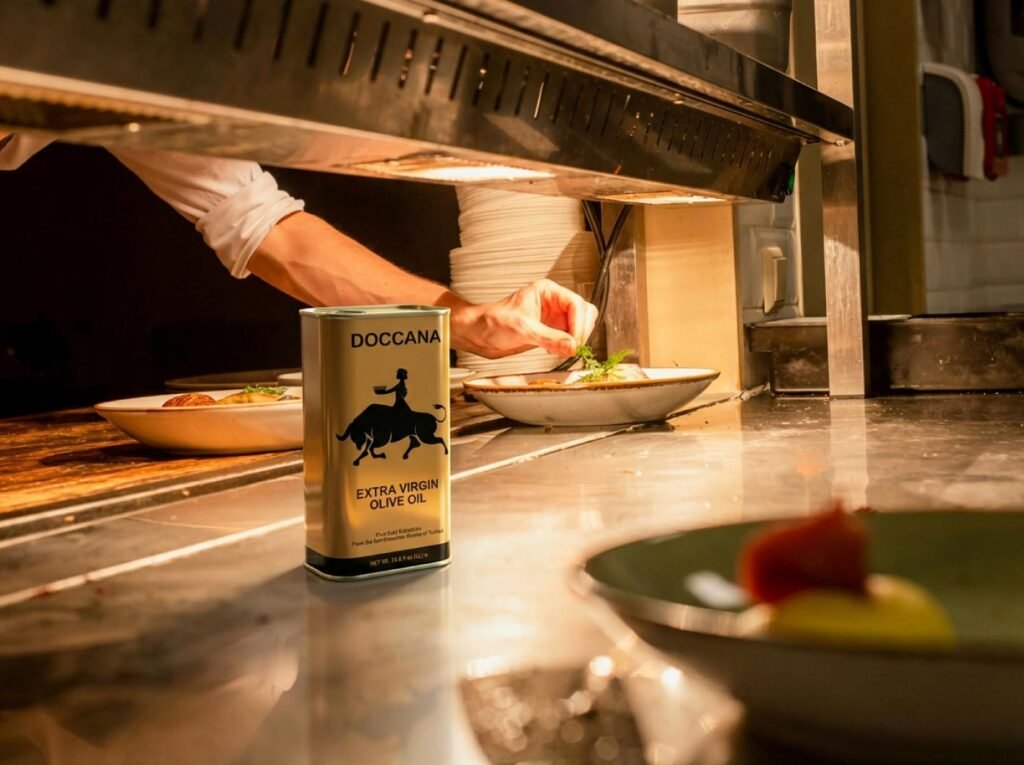
At DOCCANA, our cold-pressed extra virgin olive oil is sourced directly from Tunisian groves and bottled with full traceability, from the harvest date to your kitchen counter. We offer both classic and certified organic options because we believe that what belongs in a serious pantry should be held to a serious standard.
Browse our olive oil collections to find the expression that fits your cooking and discover what genuinely premium olive oil tastes like. Explore DOCCANA’s Extra Virgin Olive Oil Shop Premium Tunisian Olive Oil.