If you have ever sat at a table in Tunis and watched a small bowl of deep-red paste transform a simple dish into something memorable, you already know what Tunisian harissa can do. It is not just a condiment. It is a foundation, one of the most important building blocks of Mediterranean food, and arguably the pantry staple most worth making from scratch.
Harissa is hot, smoky, fragrant, and deeply savoury. It belongs on eggs, grilled meats, roasted vegetables, couscous, flatbreads, and anywhere a dish needs depth and heat. This is how to make it properly, the way it has been made in Tunisian kitchens for generations.
What Makes Tunisian Harissa Different
Not all harissa paste is the same. What is labelled harissa in supermarkets across the UAE and GCC is often a diluted, commercial approximation — stabilised with preservatives, mild to the point of being polite, and missing the character that defines the real thing.
Authentic Tunisian harissa is made with sun-dried or smoke-dried red chillies, caraway seeds, coriander, and garlic — bound together with quality olive oil. The chillies are the backbone. The spices add complexity. The olive oil carries everything together and determines the final texture and richness of the paste. This is not a recipe where the oil is an afterthought.
Tunisian Harissa Ingredients
Makes approximately one jar (250ml)
- 100g dried red chillies (a mix of mild and hot works well — guajillo for body, bird’s eye for heat)
- 4 cloves of garlic, peeled
- 1 tsp caraway seeds
- 1 tsp coriander seeds
- 1 tsp cumin
- 1 tsp smoked paprika (for depth — optional but recommended)
- 1 tsp sea salt
- 4–5 tbsp extra virgin olive oil, plus extra to finish and store
- Juice of half a lemon (optional, for brightness)
On the olive oil
This is one of those recipes where the quality of the olive oil is genuinely noticeable in the result.
A cold-pressed, fresh EVOO adds fruity, peppery notes that complement the chillies.
A refined or blended oil adds nothing except fat.
We use and recommend DOCCANA’s Tunisian olive oil here for the obvious reason that it comes from the same culinary tradition as the harissa itself.
Method
Step 1 — Prepare the Chillies
Remove the stems from the dried chillies and shake out as many seeds as possible (leave some in if you want more heat). Place the chillies in a bowl and cover with boiling water. Leave to soak for 20–30 minutes, until fully rehydrated and soft.
Drain, then squeeze out any excess water. The chillies should be plump, dark, and pliable.
Step 2 — Toast the Spices
In a dry frying pan over medium heat, toast the caraway and coriander seeds for 60–90 seconds until fragrant. Do not walk away — they burn quickly. Transfer to a mortar and pestle or spice grinder and grind to a coarse powder.
Step 3 — Blend
Add the rehydrated chillies, toasted spices, garlic, cumin, smoked paprika, and salt to a food processor. Pulse until a rough paste forms.
With the motor running, drizzle in the extra-virgin olive oil, one tablespoon at a time. Continue blending until the paste reaches your preferred texture — some people like it smooth, others prefer it with a little texture. Both are correct.
Taste. Adjust salt, heat, or lemon juice as needed.
Step 4 — Store
Transfer to a clean glass jar. Smooth the surface and pour a generous layer of olive oil over the top — this creates a seal that keeps the harissa paste fresh and prevents oxidation.
Stored this way in the refrigerator, it will keep for 3–4 weeks. Top up with olive oil each time you use it.
How to Use Tunisian Harissa
A jar of genuine Tunisian harissa is one of the most versatile things you can keep in a Mediterranean pantry. Here is how we use it:
- As a marinade: Rub onto chicken, lamb, or fish before grilling. Leave for at least 30 minutes.
- Stirred into yoghurt: A spoonful of harissa, a pinch of salt, and a drizzle of EVOO make an instant sauce for flatbreads and grilled vegetables.
- On eggs: Shakshuka, fried eggs, or soft scrambled — harissa works with all of them.
- In soups and stews: Add a spoonful to a chickpea or lamb stew in the final minutes of cooking.
- With couscous: The classic Tunisian pairing. Serve alongside merguez or roasted vegetables.
- On pizza or flatbreads: In place of tomato paste — or alongside it.
The Shortcut Worth Knowing
Making harissa from scratch is deeply satisfying. But the honest reality is that sourcing truly good dried chillies across the UAE and GCC can be inconsistent, and quality varies enormously.
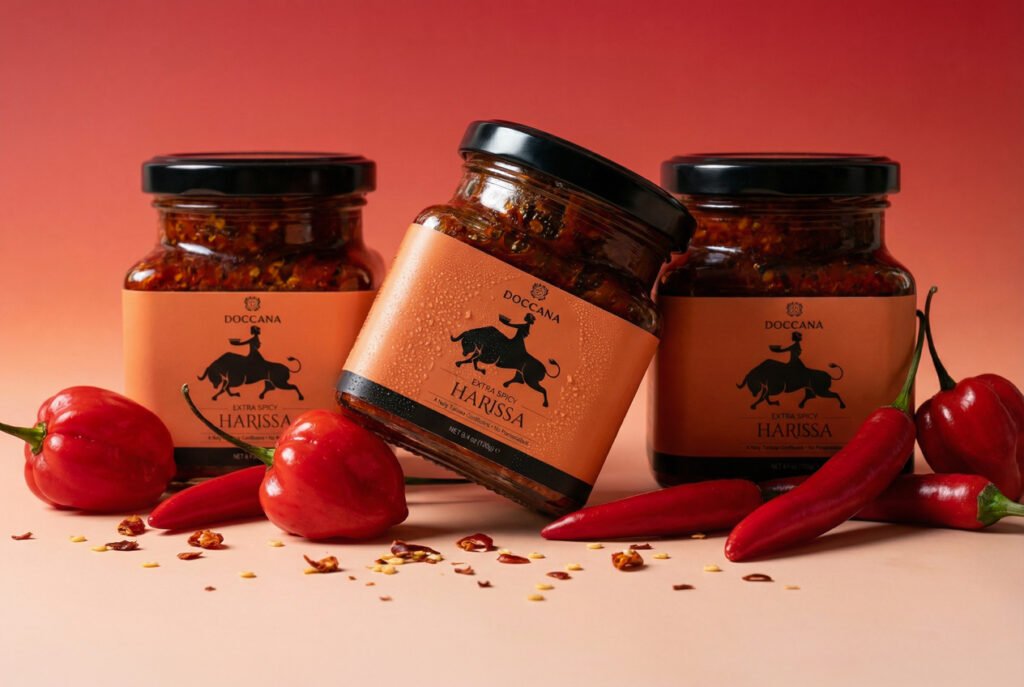
DOCCANA’s ready-made harissa paste is made following traditional Tunisian methods, using whole ingredients and no artificial additives. It is the version we reach for when we want authentic flavour without the 45-minute process, and it is built on the same values as this recipe. Explore our Mediterranean delicacies to find it alongside our other pantry essentials, all sourced with the same intention as the olive oil we use to make it.
Frequently Asked Questions
What is harissa paste made of?
Authentic Tunisian harissa paste is made from dried red chillies, garlic, caraway seeds, coriander, cumin, and quality extra virgin olive oil. That is the complete ingredient list. Some versions add smoked paprika for depth. The olive oil is not an afterthought — it binds the paste, determines the texture, and carries the flavour of every other ingredient.
How long does homemade harissa last in the fridge?
Homemade harissa keeps for 3 to 4 weeks in a sealed glass jar in the refrigerator, provided you top the surface with a layer of olive oil after every use. The oil creates a seal that prevents oxidation. Never store harissa in plastic or leave it uncovered — it will dry out and lose flavour within days.
What are the main ingredients in harissa paste?
Authentic harissa paste has five core ingredients: dried red chillies, garlic, caraway seeds, coriander, and extra virgin olive oil. Some versions add cumin and smoked paprika for additional depth. The olive oil is not optional — it binds the paste, determines the texture, and carries the flavour of every other ingredient. What separates genuine Tunisian harissa from commercial versions is the caraway seed, which gives it a distinctive smoky, earthy note absent from most supermarket harissa.
What is the difference between Tunisian harissa and other harissa?
Harissa is the original and most complex version. It uses caraway seeds as a defining spice — something absent from most Moroccan or Levantine versions. Tunisian harissa is also typically deeper in colour, smokier, and made with sun-dried or smoke-dried chillies rather than fresh ones. What is sold as harissa in most UAE supermarkets is a commercial approximation that is milder and missing the caraway and coriander that define the Tunisian original.
Ready to skip the 45 minutes? DOCCANA’s harissa paste is made the traditional way, with whole dried chillies, olive oil, and real spices. No shortcuts. Shop Harissa & Mediterranean Delicacies.