One piece of cooking advice has been repeated so often it feels like fact: don’t cook with extra virgin olive oil because its smoke point is too low. It sounds reasonable. It is also largely wrong, and the distinction matters if you are buying quality olive oil and want to use it properly.
This article covers what the smoke point actually measures, why it is not the number most people think it is, and what temperature genuinely does damage to extra virgin olive oil and to you.
What the Smoke Point Actually Means
The smoke point is the temperature at which an oil begins to smoke visibly. It is a real phenomenon, but it has been misrepresented as the single defining limit for cooking oils, which it is not.
Smoke means the oil is burning and breaking down. But the compounds that break down first are not the polyphenols or the oleic acid that make extra virgin olive oil valuable. The first things to burn off are free fatty acids and fine particulate impurities, which are present in larger quantities in lower-grade oils. This is one reason why refined oils often have a higher smoke point: they have already been stripped of most of what makes an oil worth using.
The smoke point of extra virgin olive oil ranges from 190°C to 215°C, depending on the batch, variety, and free acidity level. The higher the quality and the lower the free acidity, the higher the smoke point. A premium cold-pressed Tunisian EVOO with free acidity below 0.4% behaves better at heat than a supermarket-grade EVOO sitting at the 0.8% ceiling.
What the Research Actually Shows
A 2018 study published in the journal ACTA Scientific Nutritional Health tested multiple cooking oils at high temperatures and found that extra virgin olive oil was the most stable of all oils tested — producing the lowest levels of harmful polar compounds when heated. It outperformed refined sunflower oil, rice bran oil, and coconut oil at equivalent temperatures.
The reason is oleic acid. Olive oil is approximately 73% oleic acid, a monounsaturated fat that is chemically stable under heat. Polyunsaturated fats, found in sunflower and vegetable oils, oxidise far more rapidly when heated, producing aldehydes and other harmful compounds. The very structure that makes EVOO healthy also makes it safer to cook with than most alternatives.
The polyphenols in EVOO do reduce with sustained high heat — but they do not disappear entirely, and the oleic acid and vitamin E remain stable well within the temperature range of normal cooking.
Key fact: The average home frying temperature is 160°C to 180°C. The smoke point of quality extra virgin olive oil is 190°C to 215°C. There is a comfortable margin. The problem is not the oil — it is the myth.
The Temperatures That Actually Matter
160°C to 180°C — Sautéing, pan-frying, roasting
This is where most home cooking happens. Extra virgin olive oil is completely stable at these temperatures. Polyphenol loss is minimal. Oleic acid remains intact. This is the sweet spot for EVOO — use it freely and confidently.
180°C to 200°C — Deep-frying, high-heat roasting
Still within the smoke point range of quality EVOO. Some polyphenol reduction occurs with sustained cooking at these temperatures, but the oil does not become harmful. If you are deep-frying regularly, a classic EVOO or a slightly less expensive virgin olive oil is a sensible choice — not refined sunflower oil.
Above 210°C — Sustained very high heat.
At sustained temperatures above 210°C, EVOO begins to degrade meaningfully. Some smoke will appear. At this point, switching to a refined oil with a higher smoke point makes practical sense — not because EVOO becomes dangerous, but because the flavour deteriorates and you are wasting a quality product.
The real danger — repeated heating
Reusing oil that has already been cooked with is more damaging than the temperature itself. Polyphenols degrade cumulatively with each heating cycle. Never reuse EVOO for frying. Use fresh oil each time.
What Actually Ruins Olive Oil — Before It Reaches the Pan
The more common way people damage their olive oil has nothing to do with cooking temperature. It happens on the kitchen counter.
Light, heat, and oxygen are the three factors that degrade olive oil fastest. A bottle sitting next to the hob — warm, exposed to light, with air entering each time it is opened — loses its polyphenols and freshness far more rapidly than oil used in regular cooking. In Dubai and the UAE specifically, ambient kitchen temperatures accelerate this process significantly.
The rules are simple:
- Store in a cool, dark cupboard — not on the counter, not next to the cooker, not near a window
- Use dark glass or tin — clear plastic and light-exposed bottles accelerate oxidation
- Use within 12 to 18 months of the harvest date — not the best-before date, the harvest date
- Seal tightly after each use — oxygen exposure between uses compounds over time
If you are buying cold-pressed Tunisian EVOO and storing it correctly, cooking with it daily at normal temperatures will not ruin it. Leaving it open on a sunny counter will.
Which EVOO to Cook With
For everyday cooking — sautéing vegetables, making sauces, roasting — a quality single-origin EVOO like DOCCANA’s 500ml expression is the right choice. It is stable, flavourful, and delivers the health benefits of olive oil that refined cooking oils cannot.
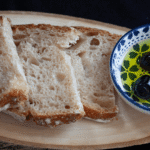
For finishing, dressing, and drizzling where the oil is not heated at all, reach for the Premium Organic EVOO 250ml. The polyphenol content and delicate flavour profile are best appreciated cold, over a salad, on bread, or finished over a warm dish just before serving.
The distinction is not a hierarchy; both are excellent oils for different moments in the same meal.
Frequently Asked Questions
Can you cook with extra virgin olive oil?
Yes. Extra virgin olive oil is stable at normal cooking temperatures of 160°C to 180°C — the range used for most home sautéing, pan-frying, and roasting. Research has shown EVOO produces fewer harmful compounds when heated than refined vegetable oils. The smoke point myth — that EVOO cannot be used for cooking — is not supported by current food science.
What temperature ruins olive oil?
Sustained temperatures above 210°C begin to degrade extra virgin olive oil meaningfully, reducing polyphenol content and affecting flavour. For most home cooking, temperatures stay well below this threshold. The more common cause of olive oil degradation is improper storage — exposure to light, heat, and oxygen — rather than normal cooking temperatures.
Is it better to use olive oil or butter for cooking?
For most cooking applications, extra virgin olive oil is a healthier choice than butter. Olive oil is high in monounsaturated fats and polyphenols with documented cardiovascular and anti-inflammatory benefits. Butter is high in saturated fat. At equivalent cooking temperatures, EVOO also produces fewer harmful oxidation compounds than butter.
Does cooking destroy the health benefits of olive oil?
Not significantly at normal cooking temperatures. The oleic acid and vitamin E in EVOO remain stable well within the 160°C to 190°C range of everyday cooking. Polyphenols reduce slightly with sustained high heat, but regular cooking use at moderate temperatures preserves the majority of olive oil’s beneficial compounds.
Cook with the Oil That Can Handle It
Cold-pressed Tunisian EVOO · Stable at cooking temperatures · Harvest date on every bottle. Shop DOCCANA’s Olive Oil Range.