Dubai has one of the most active Mediterranean food scenes in the Middle East. New restaurants are opening across JLT, Downtown, and La Mer. Supermarkets now carry ingredients that were specialty-only five years ago. And the Mediterranean diet has been ranked the world’s best eating pattern for six consecutive years.
But most people who eat Mediterranean food in Dubai don’t prepare it at home, because they don’t know which ingredients to have on hand. This guide addresses that. Ten ingredients, their purpose, how to use them, and where to find them in Dubai.
1. Extra virgin olive oil
What it is: The foundation of Mediterranean cooking is used as a cooking fat, dressing, dipping base, and finishing element. No other ingredient crosses all four roles.
Why it belongs in your pantry: Mediterranean food without good olive oil is like cooking Thai food without fish sauce. The flavour, the texture, and the nutritional depth of the cuisine depend on it. Buy cold-pressed extra virgin with a visible harvest date and a stated acidity below 0.8%. Single-origin is always better than blended.
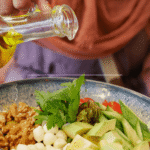
How to use it: Raw over labneh or hummus. Finishing grilled fish or roasted vegetables. As the base of any salad dressing. It needs no recipe; it just needs to be good enough to taste on its own.
Dubai storage note: Heat accelerates oxidation. Keep your bottle in a cool cupboard away from the hob and out of direct sunlight. A bottle left on a Dubai kitchen counter in summer will taste flat within weeks.
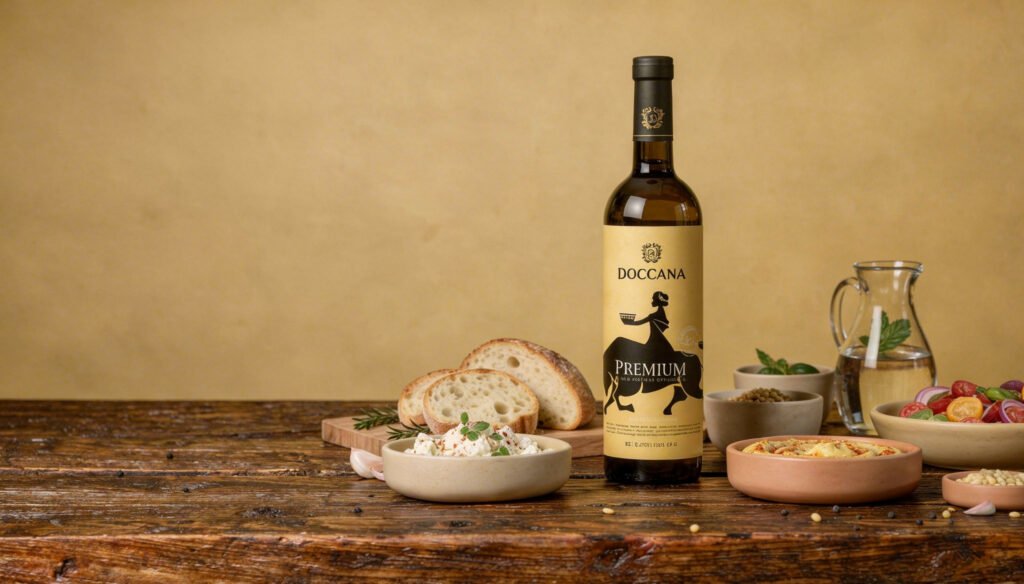
Where to find it in Dubai: Waitrose, Jones the Grocer, Organic Foods & Café for in-store options. For traceable single-origin Tunisian EVOO with a printed harvest date: shop DOCCANA online, delivered anywhere in the UAE.
For a full guide on what to look for when buying Premium Olive Oil in Dubai: A Buyer’s Guide.
2. Harissa
What is it? A North African chili paste made from roasted red bell peppers, dried chilies, garlic, cumin, coriander, and olive oil. Tunisian harissa is the most internationally renowned, smokier, and more complex than most chili pastes thanks to its olive oil base and blend of spices.
Why it belongs in your pantry: Harissa is not a hot sauce. The heat is present, but it is built around flavour, smoke, body, and warmth in a way that a bottle of sriracha is not. In a Mediterranean kitchen, it functions as a marinade, sauce base, condiment, and seasoning paste all at once. In Dubai in 2026, it has moved from specialty North African shops to mainstream supermarket shelves and is appearing on restaurant menus across the city.
How to use it: Stirred into hummus. As a marinade for chicken or lamb before grilling. Added to a shakshuka base. Spread on flatbread before toasting. Mixed into roasted tomato sauce. A spoonful into couscous while still warm.
Where to find it in Dubai: Carrefour, Waitrose, and Lebanese grocery stores carry jarred harissa. For Tunisian harissa made with olive oil and authentic spice ratios, browse DOCCANA’s Mediterranean delicacies.
To make your own from scratch: How to Make Authentic Tunisian Harissa at Home.
3. Labneh
What it is: Strained yoghurt thick enough to eat with a spoon, tangy enough to cut through rich dishes, and mild enough to take flavour from whatever you pair it with.
Why it belongs in your pantry: Labneh is already a staple in many UAE households, which means most people reading this are closer to a Mediterranean pantry than they think. In Lebanon, Greece, North Africa, and the eastern Mediterranean, strained yogurt plays the same role as a fresh, protein-rich base, bridging the gap between a sauce and a soft cheese.
How to use it: Drizzle with extra virgin olive oil and zaatar as a dip. Spread on toast under roasted vegetables. Alongside grilled fish or lamb. Thinned with olive oil and lemon juice as a salad dressing.
Where to find it in Dubai: Every major supermarket stocks labneh, like Carrefour, Spinneys, Lulu, Waitrose. Look for full-fat versions from Lebanese brands for the best texture and flavour.
4. Zaatar
What it is: A dried herb blend of thyme, sumac, sesame seeds, and salt. The ratio varies by country: Lebanese zaatar is more thyme-forward, Palestinian versions more sumac-heavy, but the function is the same across the region.
Why it belongs in your pantry: Most people in Dubai who own zaatar use it one way: mixed with olive oil as a dipping spread for bread. That is a good use, but it is one-tenth of what zaatar can do. It is equally useful as a dry rub for chicken or fish, stirred into labneh, sprinkled over eggs, or mixed into a warm grain salad where it absorbs into the dish.
How to use it: Mix with olive oil for flatbread dipping. Rub over chicken thighs before roasting. Stir into labneh with a drizzle of olive oil. Finish a warm couscous or bulgur salad with a teaspoon mixed through while still hot.
Where to find it in Dubai: Widely available at Waitrose, Lebanese grocery stores, Spinneys, and most specialty food retailers across the city.
5. Sumac
What it is: Dried and ground berries from the Rhus coriaria shrub, dark red, coarsely ground, with a tartness that is fruity and earthy rather than sharp.
Why it belongs in your pantry: Sumac was the primary souring agent across Levantine and Eastern Mediterranean cooking before lemons became widely available. It still does the job better than lemon in many applications; it adds acidity without adding moisture, and the flavour is rounder and more complex than citric acid alone.
How to use it: Sprinkled over hummus or labneh in place of paprika. Added to roasted meat or fish. Mix into olive oil for a dipping sauce. Used in fattoush or grain salads where you want acidity without liquid. Buy coarse-ground; the fine version loses character quickly.
Where to find it in Dubai: Carrefour, Waitrose, Spinneys, and most Lebanese or Iranian grocery stores. Widely available and inexpensive.
6. Preserved lemons
What it is: Whole lemons cured in salt and their own juice for several weeks. The sharpness disappears, and what remains is deeply savoury, floral, and concentrated, unlike fresh lemon in almost every way.
Why it belongs in your pantry: One preserved lemon does what a tablespoon of zest and a pinch of salt cannot. It adds a complex background note that lifts the entire dish without announcing itself. Used across Moroccan, Tunisian, Libyan, and broader North African cooking, it is one of the most impactful low-effort pantry additions you can make.
How to use it: Chop the rind finely and add to dressings. Stir into slow-cooked chicken or lamb. Mix through couscous while still warm. Add to a fish marinade before grilling. A single jar lasts months in the fridge.
Where to find it in Dubai: Jones the Grocer, Waitrose, Organic Foods & Café, and Lebanese specialty grocery stores. Increasingly easy to find across the city.
7. Chickpeas
What it is: The protein base of Mediterranean and Middle Eastern cooking, the foundation of hummus, falafel, and a long list of stews and salads from the Levant and North Africa.
Why it belongs in your pantry: Chickpeas take on flavour from whatever they are cooked with exceptionally well. A chickpea stew finished with harissa and a generous pour of olive oil, a salad dressed with sumac and preserved lemon, and a dip finished with zaatar chickpeas connect the rest of this list more than any other single ingredient.
How to use it: Dried for hummus (better texture; the cooking liquid is useful for loosening the paste). Tinned for salads, stews, and roasting. Both have a permanent place in a functioning pantry.
Where to find it in Dubai: Every supermarket in the city. For dried chickpeas, Lulu, Carrefour, and bulk stores carry multiple varieties. For tinned, any major retailer.
8. Quality canned tomatoes and tomato paste
What it is: The base of a significant portion of Mediterranean cooking, shakshuka, pasta sauces, fish stews, and braised meats all start here.
Why it belongs in your pantry: This is the ingredient most people underinvest in. Standard tinned tomatoes are acidic and thin. San Marzano DOP tomatoes are sweeter, hold their texture through cooking, and make a noticeable difference in anything where tomato is the dominant flavour. The price difference is small. The quality difference is not.
How to use it: Whole tinned tomatoes for sauces and stews where you want texture. Double-concentrated tomato paste in small amounts to add depth and body rather than tomato flavour. Buy tomato paste in a tube, not a tin, as a tin oxidises and turns bitter in the fridge after opening.
Where to find it in Dubai: San Marzano DOP at Waitrose and Spinneys. Double-concentrated tomato paste tubes at Carrefour, Waitrose, and most Italian food sections.
9. Couscous
What it is: Granules of semolina pasta that hydrate in minutes with boiling water or stock. The staple carbohydrate across Tunisia, Morocco, Algeria, and Libya, and the most practical base ingredient in a Mediterranean pantry for weeknight cooking.
Why it belongs in your pantry: Couscous has almost no flavour of its own, which makes it entirely dependent on how you season it and what you serve alongside it. That is its strength. A bowl dressed with good olive oil, a spoonful of harissa, some chopped preserved lemon, and fresh herbs is a complete meal in under ten minutes. Every component is already in your pantry.
How to use it: Base for roasted vegetables or grilled meat. Dressed warm with olive oil and harissa. Cold as a grain salad with sumac and herbs. Alongside a slow-cooked lamb or fish tagine.
Where to find it in Dubai: Every major supermarket. Look for medium-grain couscous for the most versatile texture.
10. Olives and olive-based condiments
What it is: The ingredient the cuisine is literally named after and one that most Dubai kitchens underuse beyond a mezze plate.
Why it belongs in your pantry: Keep olives in the fridge as a permanent presence. They last for weeks, they require no preparation, and they work as a snack, a salad addition, a cooking ingredient, and a quick table condiment. Green olives (Picholine, Castelvetrano) are buttery and mild, good for snacking and salads. Black olives (Kalamata) are more bitter and hold up better in cooked dishes.
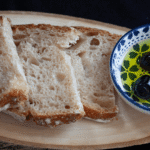
How to use it: Add to slow-cooked chicken or lamb. Scattered over a flatbread before baking. Tossed through a pasta sauce in the final two minutes. Served simply with good bread and olive oil as a starter.
Buying note for Dubai: Look for olives packed in brine or olive oil, not vinegar. Vinegar-packed olives are sharp and one-dimensional; they overpower everything rather than contribute to it.
Where to find it in Dubai: Waitrose, Spinneys, and Lebanese grocery stores for the widest variety.
Final Thoughts
The Mediterranean pantry is not a collection of exotic ingredients. Most of what is on this list you can find in Dubai this week, in the supermarkets you already shop at. The difference between Mediterranean cooking that tastes right and cooking that falls flat is almost always in the quality of a few core things: the olive oil, the harissa, the preserved lemon.
Start with what you do not have yet. One ingredient at a time is enough.
Browse DOCCANA’s Tunisian olive oil and Mediterranean pantry essentials, sourced directly and delivered anywhere in the UAE.