Dubai’s supermarket shelves are full of olive oil. Every bottle claims to be “premium”, “pure”, or “extra virgin”. Most are not what they say. And if you are cooking with olive oil every day, dressing a salad, finishing a dish, drizzling over mezze, the difference matters more than you might think.
This guide cuts through the noise. Whether you are new to buying quality olive oil in Dubai or simply want to stop paying for something that was mislabelled before it left the factory, here is what to look for, what to avoid, and where to find the real thing.
What does “Premium” actually mean on an olive oil label
The word “premium” has no legal definition. Any brand can put it on any bottle. The only grade regulated by international food authorities and the Emirates Authority for Standardization and Metrology (ESMA) is Extra Virgin.
Extra Virgin Olive Oil, or EVOO, is the highest grade of olive oil that exists. To qualify, it must meet three conditions: be cold-pressed without heat or chemical intervention, have a free acidity of no more than 0.8%, and pass a sensory panel test with no defects in aroma or taste. These are not marketing terms. They are measurable, certifiable standards.
If a bottle says “premium” but does not say “extra virgin”, you are almost certainly buying something refined, blended, or old.
For a full breakdown of how the grading system works, read our guide: What Is Extra Virgin Olive Oil And Why Does Grade Matter?
The grades you will find in Dubai and what they mean
Walk through the oil aisle at Carrefour, Spinneys, or Lulu, and you will encounter four categories. Here is what each one actually is:
Extra Virgin Olive Oil is cold-pressed from fresh olives, unrefined, and produced at temperatures that preserve its polyphenols and flavour compounds. Acidity must be below 0.8%. This is the only grade worth buying if flavour and nutrition matter to you.
Virgin Olive Oil is also cold-pressed but may have minor sensory defects and higher acidity, up to 2%. Still a natural product, but a step below EVOO in quality and nutritional value.
Refined Olive Oil has been chemically or thermally processed to remove defects. It is nearly flavourless and stripped of most of the antioxidants and polyphenols that make olive oil worth using in the first place. It is cheap because the process tolerates poor-quality olives.
Olive Oil (blended) is a mix of refined and virgin oil. It is the most widely sold category in UAE supermarkets and one of the most misleading. The label says “olive oil” and implies quality that is not there.
The recommendation is simple: always buy EVOO. For daily cooking, dressing, and finishing, it is the only grade that delivers what olive oil is supposed to deliver.
How to read the label in a Dubai supermarket
Most bottles do not make this easy. Here is what to look for, and what the absence of this information tells you:
Harvest date. This is the single most important thing on the label and the one most bottles leave off. Olive oil is a fresh product. Polyphenols and flavour compounds degrade over time, faster in warm climates like the UAE. A bottle without a harvest date is hiding something, likely that the oil is old. Look for harvest dates within the last 12 to 18 months.
Country of origin. Single-origin oils are always preferable to blended origins. A label that says “product of EU” or “blend of Mediterranean olive oils” means the contents came from multiple countries, were bulk-transported, and were bottled under a brand name that tells you nothing about quality or freshness.
Acidity level. The best producers print this on the label because they are proud of it. Anything at or below 0.5% is excellent. If the bottle only says “extra virgin” without stating the acidity, it likely sits closer to the 0.8% ceiling.
Certification marks. Look for IOC (International Olive Council) certification, EU PDO or PGI designations, or certified organic labelling. These are not guarantees of exceptional quality, but they are signals that the producer has submitted to third-party verification.
Packaging. Dark glass or tin protects oil from light-induced oxidation. Clear plastic accelerates it. In Dubai’s heat, packaging matters more than it does in cooler climates.
For a deeper look at what certifications and label claims actually mean, read: Organic Olive Oil: What the Label Actually Means.
Why is Tunisian olive oil worth knowing about?
Most premium olive oil on Dubai shelves comes from Italy, Spain, or Greece. The branding is familiar, the bottles look the part, and the price feels like a quality signal. But Tunisia, which produces roughly 10% of the world’s olive oil and has been doing so for over 2,000 years, rarely appears in that conversation.
That is changing, and for good reason. Tunisian olive oil, particularly from the Chemlali and Chetoui varieties, consistently produces high-polyphenol EVOO with a distinctive fruity, peppery character. The semi-arid climate and ancient root systems create the exact stress conditions that push olive trees to produce more polyphenols as a natural defence. The result is oil with real flavour and real nutritional depth.
The reason Tunisian oil has been overlooked in UAE retail is not quality; it is distribution. Tunisia exports the majority of its olive oil in bulk to European bottlers who label and sell it under Italian or Spanish brands. What reaches consumers in the UAE under a Tunisian label is almost always the genuine article.
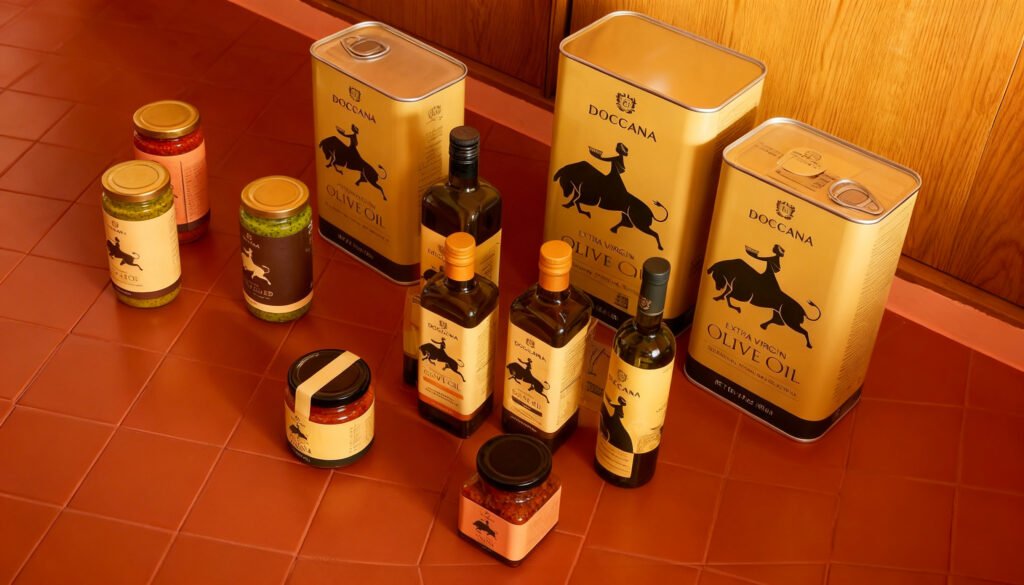
At DOCCANA, we source directly from Tunisian groves with full traceability from harvest to bottle. No blending, no intermediary bottlers, and every batch carries its harvest date. Explore our olive oil collections to see the range.
Red flags: how low-quality olive oil ends up in your kitchen
It is worth knowing what to avoid as much as what to seek out.
“Light olive oil” is not a grade. It refers to colour or flavour intensity, not quality or caloric content. It is almost always refined oil, which means it has been chemically processed and has little of the nutritional or flavour value of true EVOO.
Very low prices for EVOO are almost always a red flag. Producing genuine cold-pressed extra virgin olive oil from quality olives is not cheap. If a one-litre bottle of “EVOO” costs the same as a bottle of vegetable oil, it is worth asking how that is possible.
Oils bottled long after harvest lose polyphenols and develop flat, waxy, or even rancid notes. This is a particular risk in warm climates where improper storage accelerates degradation. An old oil will not harm you, but it will taste like nothing, and it will not carry the health properties that make EVOO worth cooking with.
Bulk-blended oils from multiple countries can legally be labelled with the country of bottling under certain conditions. A bottle labelled “bottled in Italy” is not the same as “produced in Italy from Italian olives.”
Storage tips for Dubai’s climate
Heat and humidity degrade olive oil faster than in temperate climates. This matters in the UAE more than in most places.
Store your olive oil in a cool, dark cupboard away from the hob and away from windows. The single most common mistake is keeping a bottle on the kitchen counter next to the cooker, attractive as a display, but damaging to the oil.
Dark glass bottles and tins offer the best protection. If your oil came in a clear bottle, decant it or use it faster.
Use EVOO within 12 to 18 months of the harvest date and within six months of opening. Do not refrigerate it; cold temperatures cause EVOO to cloud and partially solidify. This does not affect quality, but it is unnecessary, and the repeated warming and cooling cycles can do more harm than a stable, cool cupboard.
Final Thoughts
Choosing the right olive oil is not complicated once you know what to look for. Ignore the marketing language, check the harvest date, and buy single-origin extra virgin from a producer who can tell you exactly where the olives came from. That detail alone tells you more than any label claim.
Ready to find your bottle? Browse DOCCANA’s premium and organic olive oil range, cold-pressed Tunisian EVOO with the harvest date on every bottle. Shop the Olive Oil Range.